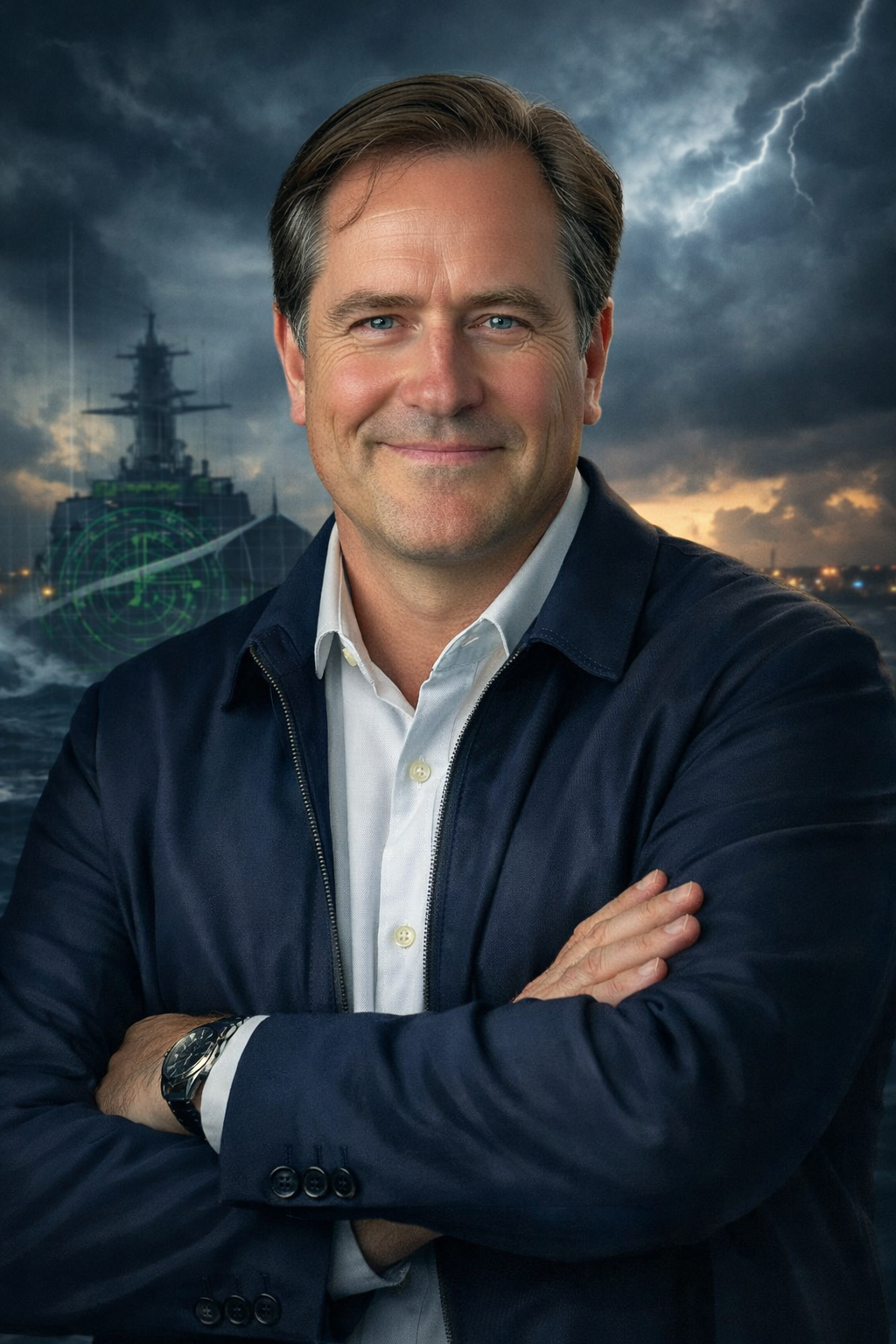
Operative Profile
The Writer Behind the Threat
Scientist. Researcher. Thriller Writer.
Twenty-two years of research. Real science. Real operations. A thriller that took that long because the truth it tells needed that long to uncover.
Read Full BioPersonnel Dossier — Eyes Only
“Some truths are too dangerous for official reports. Fiction can go where the record cannot.”
— Peter P.
Education
M.S. Chemistry
Georgia Institute of Technology
Three decades of scientific rigor applied to the page
22 Years of Research
From declassified Cold War archives to modern EMP threat assessments
Tom Clancy Connection
Clancy personally replied and directed Pete to the USCG Authors Program
USCG Authors Program
Embedded research program for operational authenticity
Congressional EMP Commission
The real-world science behind the fiction
Background Dossier
The Full Story
Peter Parsonson spent twenty-two years writing The Tempest Toss. It survived 9/11, career changes, cross-country moves, and enough rewrites to fill a classified archive. The result is a thriller built on real science, real operations, and the kind of research that sometimes makes people uncomfortable.
A chemist by training — Master of Science, Georgia Institute of Technology — Pete spent thirty years applying scientific rigor to complex technical problems. When he turned that same discipline to fiction, he didn't guess at the details. He went to the sources. He wrote to a former senior KGB general to ask about nuclear weapons pre-positioned in Washington, D.C. He emailed Tom Clancy for research advice — and Clancy wrote back personally, pointing him toward the U.S. Coast Guard Authors Program, which became a cornerstone of the book's authenticity.
The Tempest Toss is grounded in declassified Cold War history, the real science of electromagnetic pulse weapons, and findings from the Congressional EMP Commission — whose 2018 report concluded that a high-altitude nuclear EMP could kill up to 90% of the American population within twelve months. Pete didn't invent the threat. He gave it a story.
He lives in Texas, close to the border. Close enough to the truth to know what fiction can say that the official record cannot.
How Fiction Became Research
The Tempest Toss didn't start as a novel. It started as a question: What would happen if the electromagnetic pulse weapons developed during the Cold War fell into the wrong hands? The question wasn't theoretical. The weapons were real. The threat was documented. The only thing missing was the human story.
That question led Peter down a two-decade rabbit hole of declassified documents, classified briefings, physics research, and conversations with people who understand the threat that most Americans have never heard discussed in public. The result is a thriller grounded in real science because Peter believes that readers of serious fiction deserve stories that respect their intelligence.
His background as a chemist and thirty years of experience solving complex technical problems gave him the analytical tools to understand the weapons science. The USCG Authors Program gave him the framework to turn that understanding into narrative that matters. The result is a book where every technical detail, every operational procedure, every consequence is built on something real.
Writing Approach
Get the Science Right
Every technical detail in The Tempest Toss is grounded in real physics and declassified research. Peter brings a chemist's precision to the EMP threat, weapons systems, and military operations described in his novels. If it's in the book, it's based on something real. That's not negotiable.
Fiction as Truth-Telling
Some truths are too dangerous, too politically inconvenient, or too classified for official reports. Fiction can go where the official record cannot — exploring the human consequences of programs that exist but are never discussed, geopolitical games that shape history, and the conspiracies that thrive in the gaps between what governments say and what they do.
Characters First, Weapons Second
Technology and conspiracy drive the plot, but John Hunter drives the story. Peter writes characters who feel real because the best thriller isn't about the weapon — it's about the person who has to stop it, and what it costs them to do what must be done.
Twenty-Two Years of Patience
Most thriller writers research for months. Peter researched for over two decades. That patience shows in every scene, every briefing, every operational detail. The depth and authenticity that readers find on every page couldn't have been written any faster because the truth it tells took that long to uncover.
Official Recognition
USCG Authors Program
Peter P. is a member of the United States Coast Guard's Authors Program, which supports and recognizes authors whose work draws on military themes, operational history, and the lived experience of service. The program provided both the framework and the credibility for turning twenty-two years of research into a novel that matters.
The USCG Authors Program validates that The Tempest Toss meets the highest standards for authenticity, accuracy, and responsible treatment of military operations and national security themes.
Press & Speaking
Speaking Engagements
Peter is available for book clubs, writing conferences, military events, and media appearances. He speaks on topics including EMP threats, the craft of military fiction, declassified history, and the power of fiction to tell truths that official records cannot.
Virtual or in-person • Flexible scheduling • Customizable topics
Press & Media
Journalists and media inquiries are welcome. Suggested interview topics include the twenty-two year research journey, why the EMP threat matters, how a chemist became a thriller writer, and the John Hunter Series roadmap.
Press kit available • Interview-ready • Timely subject matter